Milford, NH - Exterior Detailing
5.0 ★★★★★ 188 Google reviews

Car detailing in Milford, NH, done properly.

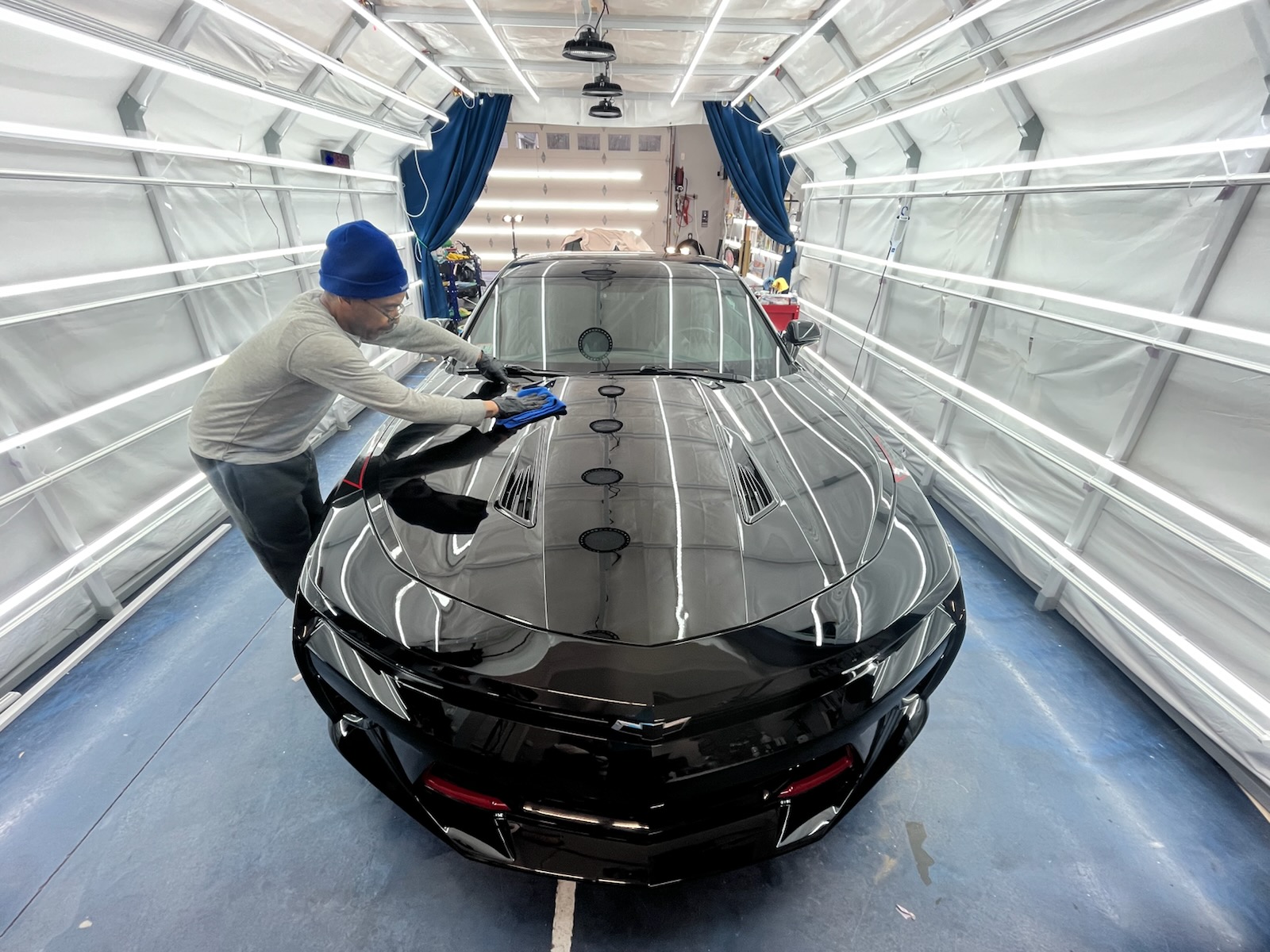
This is car detailing, not a quick car wash: a decon wash with iron removal and clay to strip bonded contamination, trim and tire renewal, glass clarity, and optional protection so the finish keeps looking this way.

Decon wash
Iron + clay to strip contamination
Trim renewal
Plastics, tires, glass clarity
Fast Response

Tell us about your vehicle

We'll recommend the right exterior detail and protection add-ons.

Open full quote form

Local focus

Premium car care for Milford, NH drivers

Common pickup areas: Milford, Amherst, Hollis, Brookline, Wilton.

Schedule in Milford
5.0
★★★★★
188 Google reviews
★★★★★

“George was excellent to work with. I had just purchased a brand new Ram 2500 Black Widow and wanted to protect the paint as much as reasonable possible. He asked questions about the usage of my truck and didn’t try to sell me stuff that would be wasted money. It's a daily driver and unfortunately too tall for my garage so it will have to spend the winters outside as well. He took his time explaining the process to me and said I could call anytime should I have any questions or concerns later on. I highly recommend his services and look forward to dealing with him in the future.”

— Greg Gilardi, Sep 27, 2026

What exterior detailing includes — and why it matters in New Hampshire

Exterior detailing is not a quick car wash. It is a multi-stage decontamination and finishing service that removes what an ordinary wash leaves behind and resets your paint to a clean, protectable surface. A standard wash takes off loose dirt; detailing removes the bonded contamination — embedded iron and brake dust, tree sap, bug residue, road tar, and hard-water minerals — that has chemically and mechanically attached to your clear coat and will keep etching it if it stays.

Why New Hampshire is hard on a vehicle's exterior

New Hampshire is unusually hard on a vehicle's exterior. Winter brings months of road salt and sand that cling to lower panels, rockers, and wheels, where they hold moisture against the metal and accelerate corrosion. Spring layers on tree sap and pollen across the Souhegan Valley's wooded roads. Summer adds UV exposure and hard-water spotting, and year-round commuting on Route 101, 101A, and I-293 throws up grit that micro-marrs the finish. Each of these bonds to the paint and, left alone, dulls the gloss and shortens the life of the clear coat.

What a full exterior detail involves

A full exterior detail at our Milford studio works in stages. We start with a foam pre-soak and a touch-safe hand wash — including wheels, tires, and wheel wells — to lift grime without grinding it across the paint. Next comes chemical decontamination with an iron remover that dissolves embedded fallout, followed by a clay treatment that pulls out anything still bonded to the surface. With the paint truly clean, a light gloss-enhancing polish restores depth and clarity, and a durable sealant or ceramic spray topper is applied so the finish beads water and releases dirt more easily. We finish by dressing trim and tires and clearing the glass for a crisp, even result.

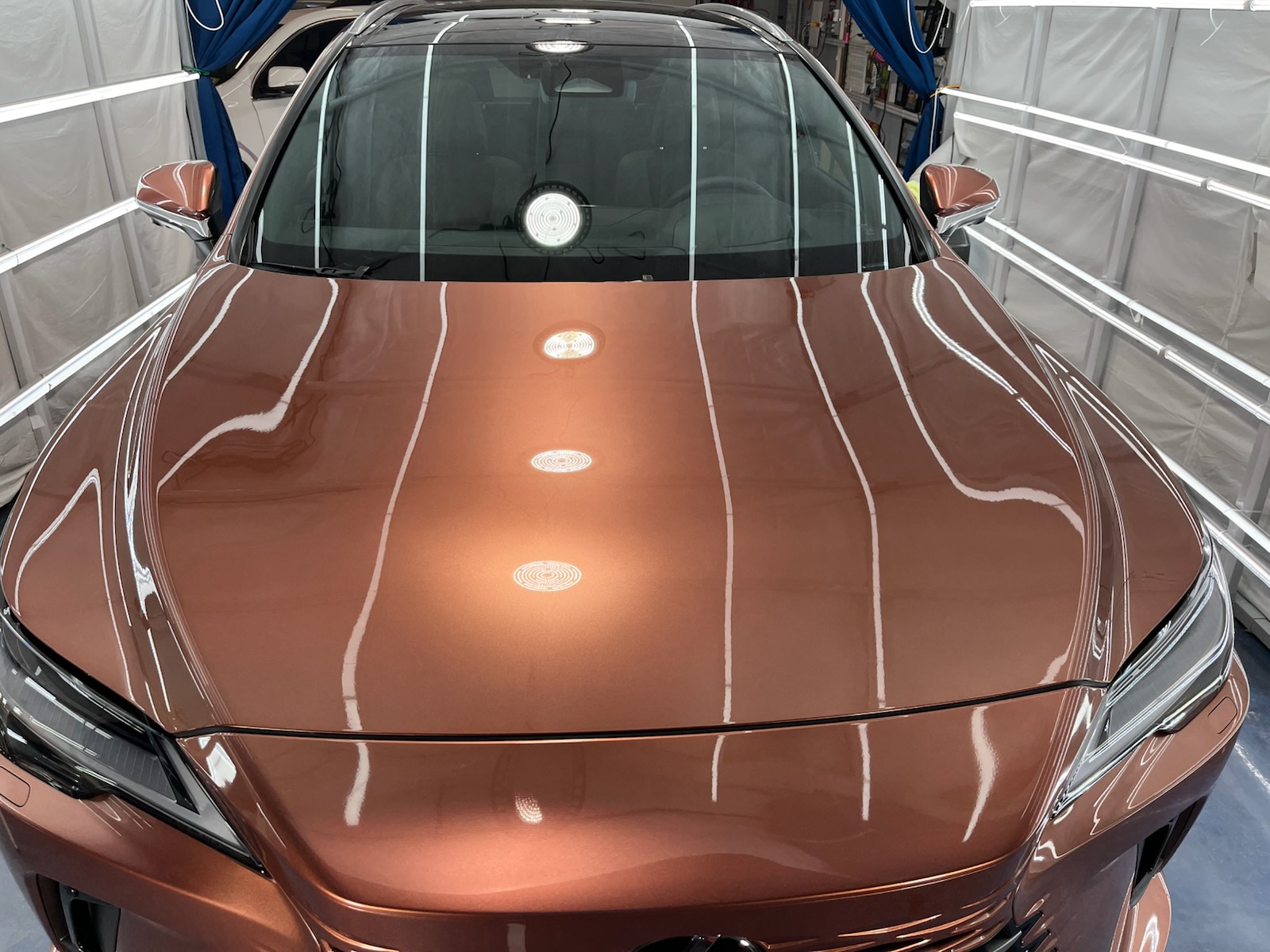
The difference is immediate and lasting: deeper gloss, smoother paint you can feel, water that sheets off instead of spotting, and a vehicle that stays cleaner between washes. How long the protection lasts depends on the product and your driving — a sealant typically holds for a few months while a ceramic topper lasts longer, and either can be kept up with periodic maintenance washes. For New Hampshire drivers we usually recommend a detail in spring to strip off the winter's salt, and again in fall to head into winter with a protected surface.

Why detailing comes before any protection

Exterior detailing is also the foundation for longer-term protection. Any coating is only as good as the surface beneath it, so a thorough decontamination detail is the first step before a ceramic coating or paint protection film — the detail removes the contamination, and the coating or film then locks in that clean finish. Whether you drive a daily commuter, a leased vehicle you want to return in top condition, or a weekend enthusiast car, we tailor the level of decontamination, polishing, and protection to the vehicle and how you use it.

Exterior detailing or paint correction?

A detail refreshes and protects healthy paint; it is not the same as paint correction. If your finish has visible swirl marks, scratches, or oxidation, those require multi-stage machine correction to actually remove the defects rather than temporarily hide them. During the inspection we'll tell you honestly which your vehicle needs — many cars benefit from a detail now and correction later — and we'll never push correction a car doesn't need.

Detailing

Exterior detailing tuned for daily drivers, exotics, classic & show cars.

Wash & Decon

Exterior Reset

Foam wash, iron removal, and clay to strip bonded contamination.

  • Touch-safe wash + wheels/tires
  • Iron remover and clay treatment
  • Glass clarity and streak-free finish
Finish Boost

Gloss & Seal

Adds a gloss-enhancing polish and durable sealant for easier washes.

  • Light polish for extra pop
  • Sealant or ceramic spray topper
  • Trim and tire renewal
Add-Ons

Protect & Maintain

Hydrophobic glass, wheel protection, and maintenance plan options.

  • Glass coating for visibility
  • Wheel face/Barrel protection
  • Maintenance detail scheduling

Process

A clean, careful workflow.

1

Inspect & plan

We identify contamination, water spots, and tar, then plan safe removal.

2

Decon & wash

Foam, iron remover, and clay, with careful drying to prevent marring.

3

Renew & dress

Trim, tire, and glass treatments for a crisp, even finish.

4

Protect & maintain

Sealant or ceramic toppers plus maintenance recommendations.

FAQ

Frequently asked questions

Exterior detailing timelines, protection, and maintenance.

Many exterior details are completed the same day. A decontamination wash with clay, wheel and tyre work, and a sealant takes a few hours on a typical vehicle. Adding machine polishing changes the picture: even a single-stage correction is a substantial job, and multi-stage work or a ceramic coating extends the booking to one or two days, because each stage has to be completed, inspected under proper lighting, and then protected. Condition matters more than size -- a car with heavy iron fallout, tar, tree sap or old failing wax needs a genuinely thorough decontamination stage before anything else can begin, and rushing it just polishes contamination into the paint. We look at the vehicle and set clear expectations when you book, and if the inspection turns up something that changes the estimate, we tell you before carrying on.

Yes. Tar, tree sap and industrial fallout are bonded contamination -- they sit on top of the clear coat and cannot be washed off, which is why a car can look dirty again immediately after a wash. We remove them chemically first, using dedicated tar solvents and an iron remover that dissolves the embedded brake dust and rail dust responsible for the orange specks you find on light-coloured paint, then mechanically with clay to lift whatever remains. That order matters: claying a panel still carrying bonded iron drags those particles across the paint and marks it. Heavier contamination adds time, and on badly neglected paint the decontamination stage can take longer than everything after it. We check the panels and confirm with you before starting rather than absorbing it silently into the slot. Getting this stage right is what makes the polishing that follows safe.

Yes, and it is worth doing at the end of any exterior detail, because freshly decontaminated and polished paint is bare and will pick up contamination faster than protected paint. A sealant is the straightforward option: it lasts months, adds gloss, and makes washing easier. A ceramic coating is the durable option, bonding to the clear coat for years rather than months, with far better water behaviour and chemical resistance -- but it needs the paint corrected first, because it locks in whatever is underneath it. There are also ceramic-infused toppers that sit between the two in both cost and lifespan. Which one makes sense depends on the condition of the paint, how the vehicle is stored, and how often it will be washed. We recommend on that basis rather than defaulting to the most expensive option.

Yes. Maintenance details are scheduled visits that keep protection performing between major services, and they are the difference between a coating that lasts its full rated life and one that stops beading after eighteen months. A visit covers a safe wash using methods that do not put swirl marks back into corrected paint, decontamination where it is needed, a top-up of the protection, and wheel and tyre care. On vehicles carrying paint protection film we also inspect the film edges, which is where lifting starts and where it is cheap to fix if caught early. The cadence depends on how the car is driven and stored; quarterly suits most coated daily drivers. Skipping a visit does not void anything -- it just means the next visit has more work to do, and we reset the protection level then.

An exterior detail focuses on the paint, glass, wheels, tyres and exterior trim -- the surfaces that determine how the car looks and where protection actually goes. Engine bays are not included by default, because they are a different job with different risks: modern bays carry sensitive electronics, exposed connectors and sound insulation that does not tolerate being soaked, so a proper bay refresh is a careful, controlled process rather than a rinse. We are happy to add a light engine bay refresh on request where the vehicle is suitable, and we will say so if it is not. Undercarriage work is similar -- we can address it where there is a specific reason, such as salt removal after a New Hampshire winter, but it is discussed and quoted rather than assumed. Tell us what you are actually trying to solve and we will advise honestly.

From our blog

Quote

Tell us what needs attention outside

Road film, brake dust, or added protection-we'll tailor the exterior detail and schedule.

Phone 603-400-6369
Call instead

Serving nearby towns

We work on cars from across Southern New Hampshire. These pages cover what this service looks like in each town.